
Fire Ant Mounds Are Showing Up Around Lubbock — Here’s What Residents Should Know |
Imported fire ants are already established in parts of Lubbock, and recent rain may be making colonies much easier to spot in yards, parks and school grounds |
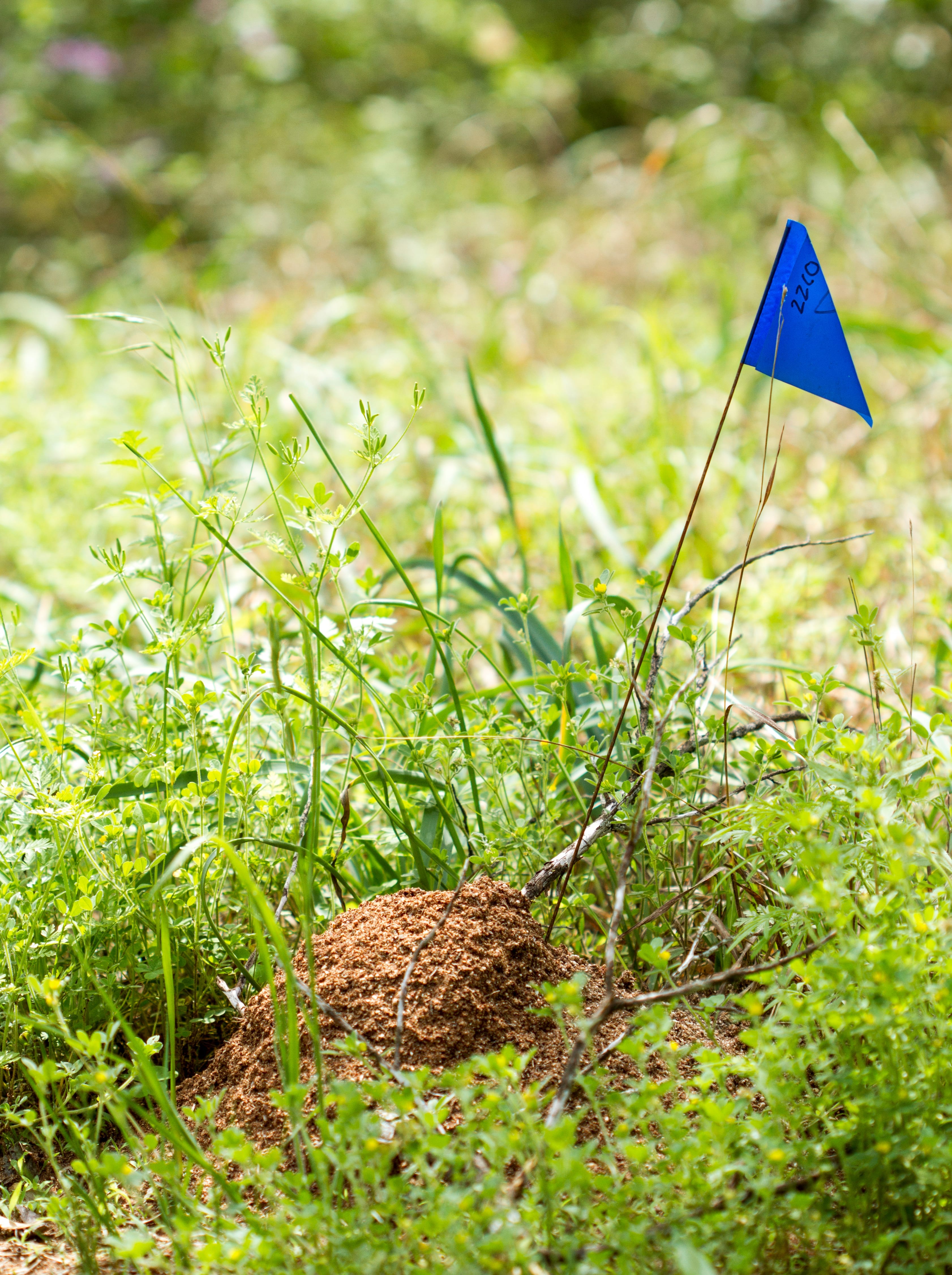
A walk through a Lubbock neighborhood after recent rain can reveal something that many residents may not have been looking for: fresh ant mounds rising out of lawns, school grounds and parks.
Some of those mounds may belong to red imported fire ants, an invasive species that has been established in Lubbock for decades.
Dr. Patrick Porter said the recent appearance of more obvious mounds does not represent an increased presence of fire ants across the city.
Instead, he said the ants are simply easier to detect after the recent heavy rains.
In other words, Lubbock is seeing more evidence of colonies that were already here, not necessarily more colonies than before.
Porter said non-native fire ants have been present in Lubbock since the 1980s and that two kinds of fire ants can be found here: a naturally local species and an invasive species that is not originally from this area.
He also pointed to something distinctly Lubbock about where the ants thrive.
The surrounding South Plains are naturally arid, and Porter said fire ants are not found nearly as widely outside the city.
Inside Lubbock, however, irrigated lawns, landscaped properties, parks and other regularly watered areas create the moisture the ants need.
That means the city itself provides a more hospitable environment for fire ants than much of the dry countryside around it.
Texas A&M AgriLife’s Lubbock center likewise says fire ants are present in many neighborhoods and parks around the city and behave somewhat differently on the High Plains than they do in wetter parts of Texas.
Local records show fire ants have been found in Lubbock since at least 1984, and a Texas Tech survey in 2005 documented colonies at locations across the city.
The Texas Department of Agriculture places a portion of Lubbock under an official imported fire ant quarantine, roughly bounded by I-27 on the east, Ursuline Street on the north, Milwaukee Avenue on the west and 98th Street on the south.
The quarantine is aimed mainly at slowing human-assisted spread through soil, sod, nursery materials, hay and other items that can transport colonies.
|
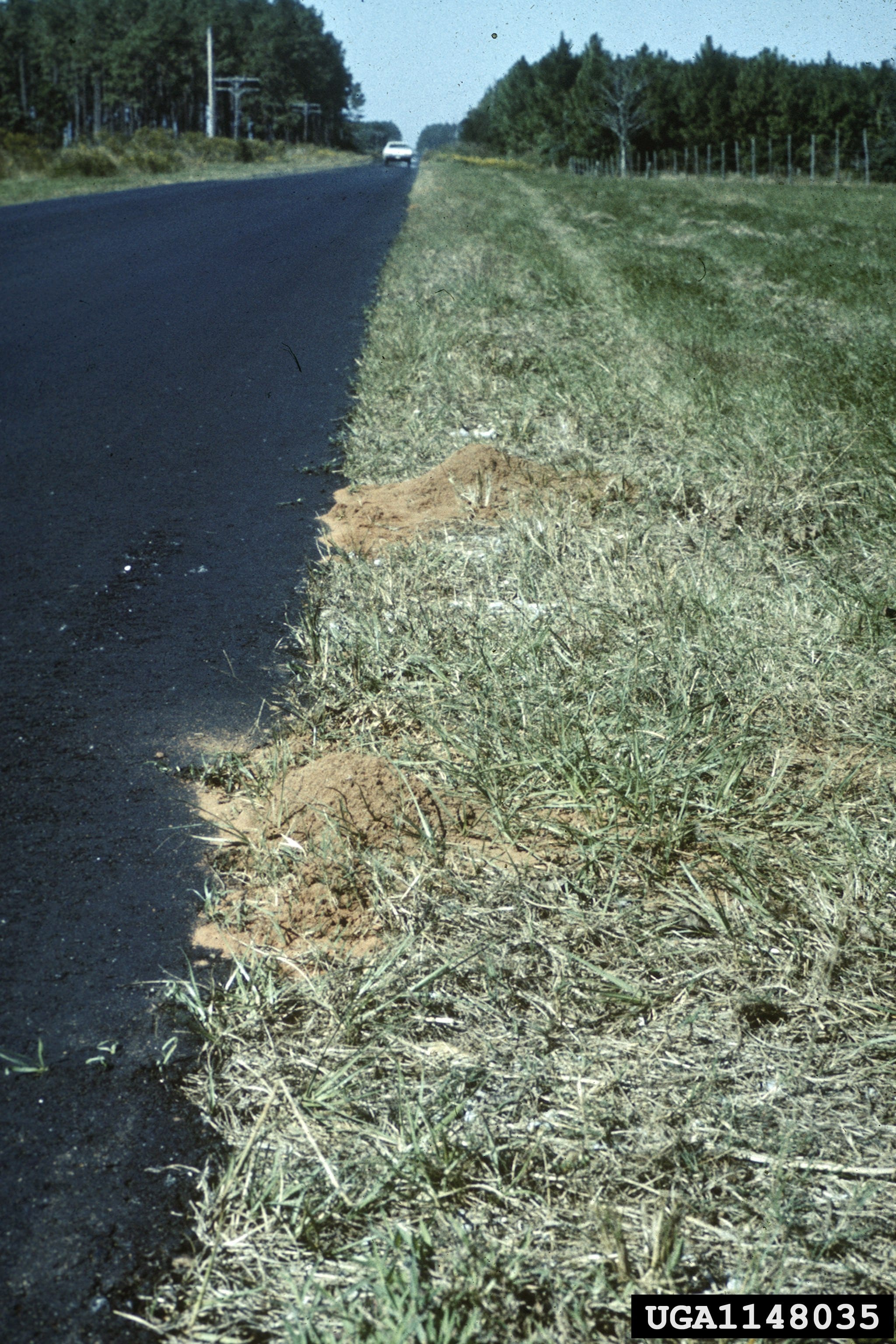 Red imported fire ant mounds alongside a road in the United States. USDA APHIS PPQ – Imported Fire Ant Station / Wikimedia Commons, CC BY 3.0 US. |
Recent rainfall may be making the ants more noticeable.
AgriLife guidance explains that wet soils can push colonies closer to the surface as ants relocate upward to avoid saturated ground.
The result can look like a sudden population explosion even when the ants were already present.
That distinction matters because fire ants are not just another lawn nuisance.
Imported fire ants respond rapidly when a nest is disturbed, and many workers can swarm onto a person or animal and sting repeatedly.
USDA guidance notes that the ants are especially attracted to open sunny areas such as lawns, parks, fields and playground-type environments.
That makes colonies on school grounds, athletic areas, neighborhood parks and backyards worth taking seriously.
Children may unknowingly step on or sit near a mound, and dogs exploring a yard with their noses and paws can disturb a colony before an owner realizes the nest is there.
Fire ant stings are painful and can produce a burning sensation followed by an itchy pustule or blister.
Most stings are unpleasant rather than life-threatening, but severe allergic reactions are possible.
Animals can also be injured by repeated stings, and USDA specifically warns that very young and newborn animals are particularly susceptible to fire ant venom.
For pet owners, the practical advice is straightforward: inspect areas where dogs or cats spend time, especially after rain, and avoid allowing pets to investigate suspicious mounds.
If a pet is suddenly covered with ants or appears to have been stung repeatedly, move the animal away from the colony and contact a veterinarian if there is swelling, weakness, breathing difficulty or a significant number of stings.
|
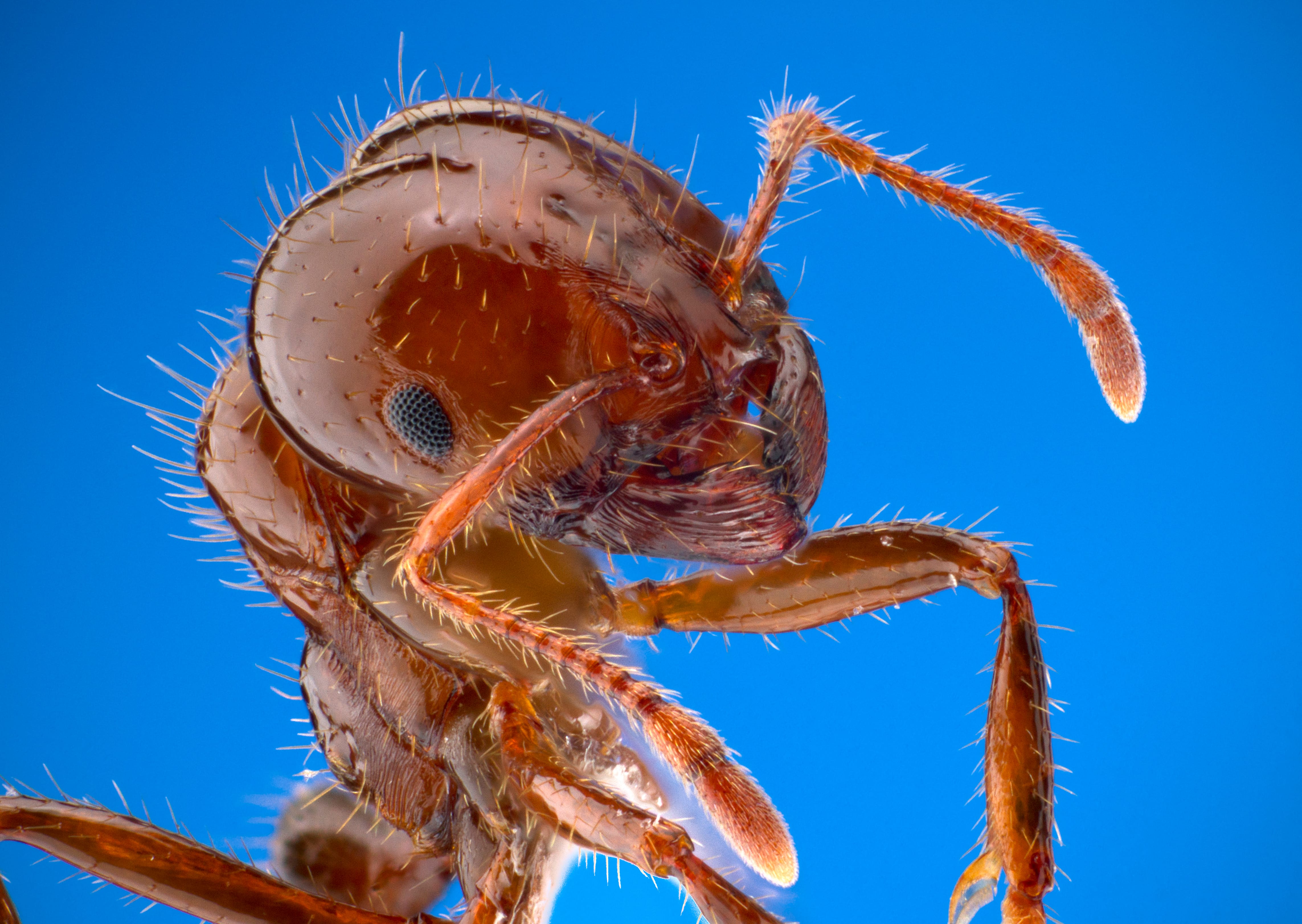 Red imported fire ant (Solenopsis invicta). Public-domain image by Alex Wild, University of Texas Insects Unlocked / Wikimedia Commons. |
Recognizing a mound on the South Plains can be tricky.
In Lubbock’s drier climate, fire ant nests may be lower and less dramatic than the tall rounded mounds commonly pictured in humid parts of the South.
One local pest-management source notes that Lubbock fire ant mounds can be only a few inches high and may form near sidewalks, roads and other areas that provide warmth or runoff.
Identification by appearance alone is not always reliable, so AgriLife recommends contacting the local Extension office when there is uncertainty.
|

Two quick looks inside an active colony—and a deeper dive if you’re curious. 1. A busy colony up close · 24 seconds · silent 2. When the mound is disturbed · 1 minute 28 seconds · silent The two short clips were filmed in Australia and illustrate fire-ant behavior; they are not footage from Lubbock. Photo/video credit: National Fire Ant Eradication Program. 3. Dig deeper: Red Imported Fire Ant Management · 52 minutes For local identification help, see AgriLife Lubbock’s illustrated High Plains guide (PDF). Confirm the ant species before choosing a treatment, and follow the product label. |
For homeowners who confirm fire ants, Porter said the most effective control comes when an entire block or neighborhood works together rather than treating one yard in isolation.
He recommended applying an appropriate insect growth regulator broadly across participating yards to interrupt colony development, then treating especially large or active mounds with a more concentrated mound treatment.
The neighborhood approach matters because ants can simply move back into a treated yard from surrounding untreated property.
Porter said effective control products are generally available locally through nurseries and home-improvement or hardware stores, including retailers such as Home Depot, Lowe’s and Ace Hardware.
Residents should follow the product label carefully and choose products specifically labeled for fire-ant control and the area being treated.
Improvised methods such as gasoline should never be used because they are dangerous and contaminate the soil.
Residents who find suspected colonies on City property can submit a service request through the MyLBK app, the City’s online request system or 311.
Lubbock ISD also maintains a formal pest-management request process through its Facilities Department.
Elya Warnock, Facility Operations Specialist with Lubbock ISD Facilities, said the recent rains have brought the ants out and made them more noticeable.
Warnock said the district’s online Pest Management Action Form is a good way for residents and campus users to report concerns, and reports can also be sent directly to the Facilities Department by email.
She said both district facility-maintenance personnel and the district’s contracted pest-control service respond to reported pest concerns.
For now, the evidence points to increased visibility rather than an increased fire-ant population.
Recent rain has made established colonies easier to notice, while irrigated lawns and landscaped areas continue to provide the moisture that allows fire ants to persist across much of the city.
The Lubbock Signal is continuing to seek additional local observations and comments from City officials as we follow the issue. |
Local reporting & useful links This article incorporates local reporting from conversations with Dr. Patrick Porter and Lubbock ISD Facility Operations Specialist Elya Warnock. Texas A&M AgriLife: Fire Ants in Lubbock · AgriLife control methods · AgriLife sting and medical information Lubbock ISD Facilities and Pest Management Action Form. Facilities contact: Elya Warnock, elya.warnock@lubbockisd.org, 806-219-0220. Use products labeled for the species and treatment area, follow all label directions, and keep children and pets away as the label requires. Reporting checked November 2, 2026. |
0 Comments
Join the conversation
Be the first to comment
Share your thoughts above.