
Pantex Innovation Challenge Brings Real-World Problems to Texas Tech |
Students from across Texas Tech can spend two days solving national-security challenges, competing for cash prizes and meeting the professionals behind the work |
There is a big difference between solving a classroom problem and solving a problem somebody actually needs solved.
Texas Tech students will get a taste of the second kind this week.
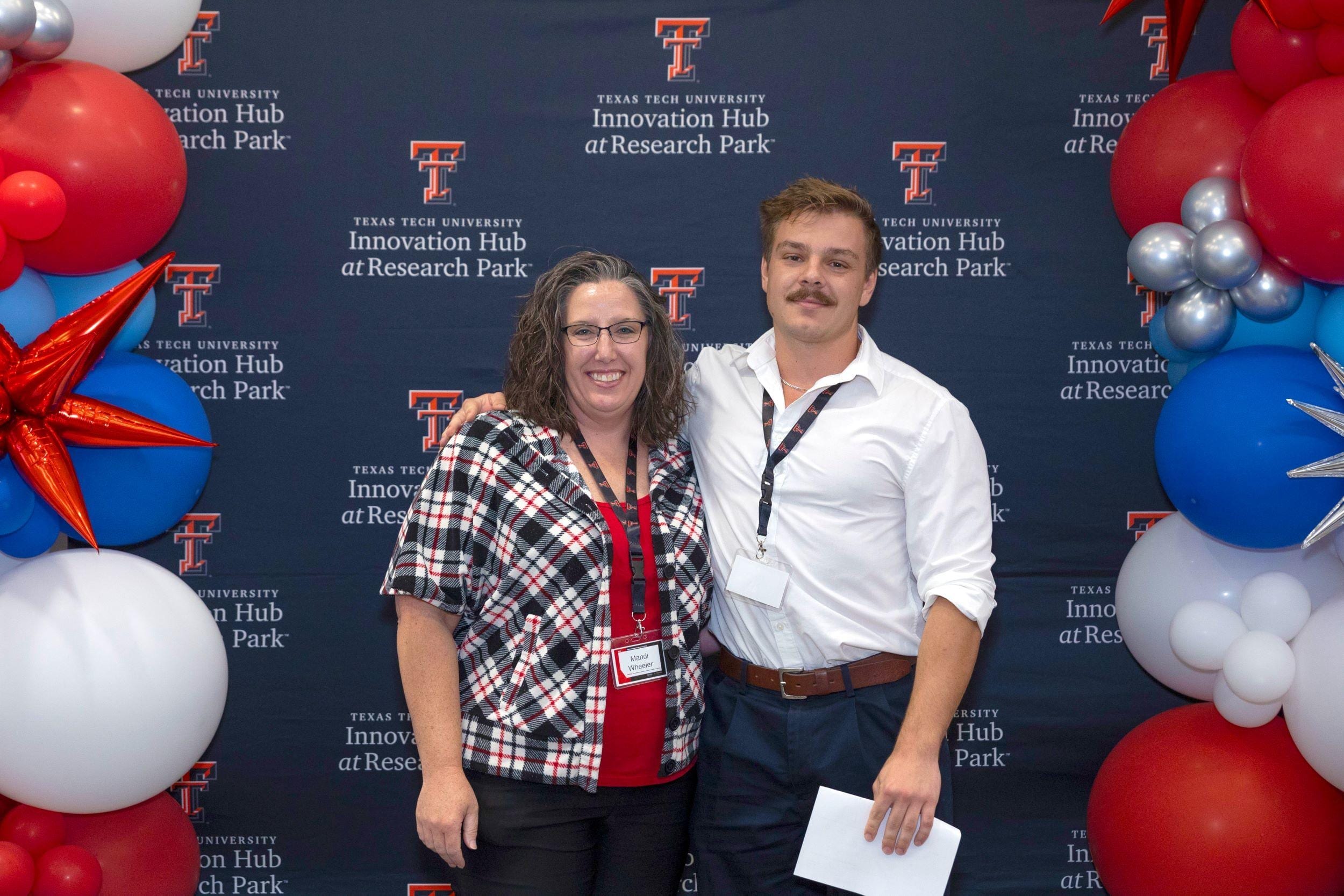
On October 22 and 23, the Pantex Innovation Challenge returns to the Innovation Hub at Research Park in Lubbock, giving student teams two days to develop solutions to real-world national-security challenges.
The format is simple enough to explain but difficult to execute well.
Pantex professionals bring the problems.
Student teams study them, develop possible solutions and present what they believe could actually work.
The first round happens in Lubbock, with $10,000 in cash prizes at stake.
First place pays $5,000, second place $3,000 and third place $2,000.
The top two Texas Tech teams then advance to a second round at the Pantex Plant on November 6, where they will compete alongside teams from Amarillo College and Texas A&M University.
The larger opportunity may be more important than the prize money.
Pantex, located near Amarillo, is part of the nation’s Nuclear Security Enterprise and carries out highly specialized work tied to weapons assembly and disassembly, high explosives, engineering, manufacturing and national security.
That might make the competition sound like something designed only for engineering majors.
It is not.
Current Texas Tech students who are U.S. citizens are eligible, and students from all academic disciplines are encouraged to participate.
That matters because difficult real-world problems rarely belong to only one field.
Engineering may solve one part.
Business thinking may solve another.
Communication, data, design, logistics or human behavior may determine whether a technically strong idea is actually usable.
The challenge gives students direct access to Pantex professionals while they work, allowing them to ask questions, test assumptions and understand the constraints surrounding the problem.
For finalists, the second round adds something even harder to replicate in a classroom: direct exposure to the Pantex facility, its leadership and potential career paths.
That connection is especially meaningful for West Texas.
Talented students often assume that sophisticated technology, advanced manufacturing and national-security careers require leaving the region.
Programs like this make another possibility visible.
A student can study in Lubbock, work on a problem connected to one of the country’s most specialized federal facilities and begin building relationships with people doing that work less than two hours away.
Texas Tech’s Innovation Hub has increasingly become a place where those kinds of connections are supposed to happen.
The Hub brings together students, researchers, entrepreneurs, mentors and outside organizations around commercialization, startups and problem-solving.
The Pantex challenge fits naturally into that mission because it starts with an actual need rather than a hypothetical exercise.
|
 Illustrative image of collaborative engineering work. Photo by ThisIsEngineering on Pexels |
Participants have to think beyond whether an idea sounds clever.
Does it solve the problem?
Can someone use it?
Can it be explained clearly?
Can a team turn incomplete information into a credible recommendation under time pressure?
Those questions sound familiar to anyone who has ever built a business, managed a project or tried to improve an existing system.
Innovation without usefulness is mostly an interesting experiment.
Useful innovation is different.
It can produce better systems, better products, new intellectual property, new companies and new careers.
Registration for the challenge closes October 21, just one day before the first round begins.
For students who participate, two days at the Innovation Hub could result in prize money, a trip to Pantex or a connection that shapes where they work after graduation.
For Lubbock, the event points to something larger.
A university becomes more valuable to a city when ideas, employers and ambitious people repeatedly collide with one another.
The Pantex Innovation Challenge is one small example of that collision happening here. |
0 Comments
Join the conversation
Be the first to comment
Share your thoughts above.